ALIENS IN OUR SEAS
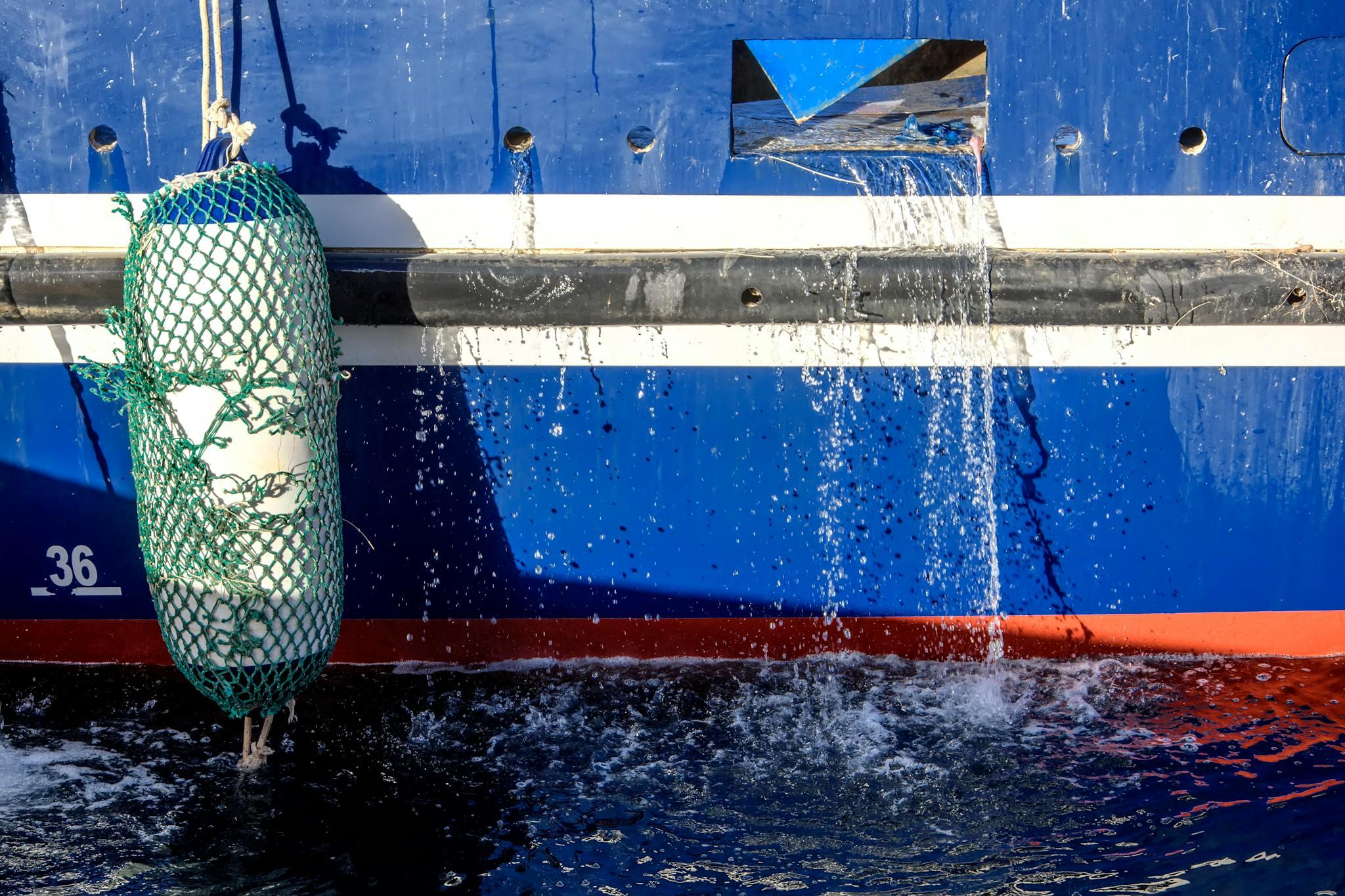
Tens of thousands of ships traverse the seas every day, and Gujarat’s 1,600km coastline has ports of call key to inter?national sea trade. However, ships docking at its ports could also be delivering unintended cargo – alien aquatic species. Fishermen in the Gulf of Kutch and off Veraval’s coast often land unusual creatures in their catch — species not en?demic to local waters.
EnvironmenTalists label them unwelcome, and for a reason. Studies acknowledge that certain alien species found along Gujarat’s coast have been introduced by ship ballast water discharge and have the potential to throw the delicate local marine ecosystem off balance.
According to Gujarat Maritime Board (GMB) sources, around 25,000 large vessels pass through Gujarat’s waters every year. Studies term ballast tanks as floating aquariums, carrying up to 10,000 different species. Not every species makes it alive. The ballasting and de-ballast?ing process, besides the dark and toxic conditions inside tanks, are unfriendly for survival. The spe?cies that get spat out at a new ad?dress having endured the voyage, start evolving to adapt.
This is when the bioinvasion threat begins. The species ‘invade’ the delicate local coastal ecosystem by slowly establishing a reproduc?tive population. Once established, they prey on or compete with local species for food and introduce new pathogens, thus contributing to loss of biodiversity, says an India Biodiversity Report.
Take the example of Asian shore crabs, natives of the western Pacific Ocean coast from southern Russia to Hong Kong, which have now made Gujarat’s coast their new home. Often caught in fisher?men’s nets off Veraval, these were introduced by ballast water dis?charge. These opportunistic omnivores reproduce rapidly and prey on local crabs, clams and small marine inver?tebrates such as amphipods, gastropods, bivalves, barnacles and poly?chaetes. This wide a diet means more widespread is their impact.
Or the snowflake coral, also introduced by ballast water discharge. Studies report that it was spotted in the Gulf of Kutch in 2002 by Zoological Survey of India (ZSI) teams. By 2012, it had be?come dominant on coral beds at Laku Point.
Not all species are invasive. Some have shown to form a symbiotic relation with the local ecosys?tem. In the absence of awareness among fishing communities, Guja?rat lacks a proper registry on inva?sive species. Most of them are re?ported by scientists in individual studies.
“There’s no specific organization or govt body to which fisher?men report finding alien species. They throw them back into the sea because they don’t know if they are edible or poisonous,” says Chauhan Hitesh, a PhD scholar from GU’s Dept of Zoology, Human Genetics, Biomedical Technology and Wild?life Biology & Conservation.
The bioinvasion threat will only grow as seaborne trade expands. What compounds the problem is that controlling and eradicating invasive species that have estab?lished themselves is a deep challenge.
The International Marine Organization’s (IMO) International Convention for the Control and Management of Ships’ Ballast Water and Sediments (BWM Convention) aims to address it.
India is yet to ratify the convention, which came into force on Sept 8, 2017, and there is yet no consensus among nations due to different den?sities of alien species existing in different ocean waters. Also, the huge quantities of mud at the bot?tom of ballast tanks can’t be treated.
Atul Sharma, head of environment cell, GMB, says, “India has not yet ratified the BWM Convention. As per guidance and mandate of Govt of India, GMB shall follow to comply with it if acceded by In?dia. GMB already complies with reception facilities for ships’ wastes, so this may be enhanced if mandated in future.”
He adds that ballast water management in ships begins at the ship manufacturing and assembly stages, and flag states that have already acceded to the treaty must adhere to the rules. “So, such discharge of ballast water from BWMC-compliant foreign vessels in the Indian Ocean would take place only after neutralizing invasive species.” Sharma says that during his surveys of sea level rise, it was suspected that many species get dragged from one coast to another, irrespective of change of ballast water. This, he says, cannot be controlled.
A senior official in the Directorate General of Shipping explains, “It is the responsibility of vessels and ports. India not ratifying to the convention does not mean that its ships are not compliant. Maritime states can ask ships that don’t adhere to the guidelines to give ballast water to the port reception facilities or go back deeper into the sea to exchange ballast water in designated areas. Exemptions are given only in exceptional cases, so most vessels must comply at least with IMO’s D1 standards.”
WHAT IS BALLAST WATER EXCHANGE?
Cargo ships take sea water in their ballast tanks or cargo holds to make up for lost weight after goods are unloaded. This is essential for their hydrodynamic
safety in rough seas and makes manoeuvring easier. When ships reload cargo, they discharge the ballast water at the loading port, unintentionally transporting
marine organisms such as bacteria, microbes, small invertebrates, eggs and larvae.
INTERNATIONAL MARINE ORGANIZATION'S BWM CONVENTION
MANDATES
- All ships in international traffic must manage their ballast water and sediments to a certain standard
- All ships to carry a ballast water record book and an international ballast water management certificate
- D1 Standard requires ships to exchange ballast water in open waters, away from coastal areas so that few organisms survive
- D2 standard specifies the maximum amount of viable organisms allowed to be
discharged including specified indicator microbes harmful for human health. This usually involves installing ballast water management treatment system
- All ships must meet D2 Standard by Sept 8 this year
EXPERTS SPEAK
Unregulated ballast water discharge is indeed a global threat, looking at the
growing sea trade. While few species may form symbiotic relations in the local ecosystems, few are threat to the endemic marine flora and fauna. While,
few studies have been done in this direction, in-depth research will help identify more such species along Gujarat’s coast and their impact
Dr Rahul Kundu | PROFESSOR, DEPARTMENT OF BIOSCIENCES,
SAURASHTRA UNIVERSITY
Invasive species, largely propelled by ballast water discharge among other causes, pose a formidable threat. Gujarat’s diverse marine and
freshwater ecosystems face economic losses, biodiversity decline and potential health hazards. Urgent action is imperative, necessitating
robust regulations, effective monitoring, and international cooperation on the
issue
Hitesh Chauhan | PhD SCHOLAR
Post a comment